The kitchen is no longer just a room; it is a space where identity, aspirations and health consciousness converge, reshaping what 1.4 billion people choose to eat and why.
There is a particular moment, sometime around 2020, perhaps, when the Indian consumer stopped just eating and started thinking about eating. The pandemic locked us in, turned kitchens into therapy rooms, and put sourdough starter on Instagram. But what emerged from those two years was something far more durable than a passing moment, a structural, lasting shift in how India consumes food.
Over a decade of close observation, through investments, founder conversations, and the patient tracking of what actually builds enduring consumer brand value, the FMCG landscape has shifted, incrementally at first, then with gathering momentum. This piece maps that landscape: not just from an investor’s vantage point, but as a practical guide for every founder building the next generation of Indian food brands.
These are the six new rules of Indian food consumption. Not trends, rules. Because once a behaviour becomes structural, it stops being optional. Founders who ignore any one of these six pillars won’t just underperform; they’ll become irrelevant.

RULE 01
The Consumer Has Changed
Identity, aspiration, and the death of passive eating
Ten years ago, Indian food brands could be built on simplicity: a good product at the right price, distributed through a kirana. The consumer asked very little. They trusted the familiar. A Parle-G biscuit was a Parle-G biscuit; it fed the body, not the ego.
That consumer has not disappeared. But a second, far more demanding consumer has arrived, and they are reshaping the entire market. Urban, typically in the mid-to-late twenties, earning ₹60,000 a month, watches YouTube food documentaries, tracks her macros, and will switch brands without guilt if a better story comes along. They are not loyal; they are curious.
This is the most important structural shift in Indian FMCG: the rise of the intentional consumer. Food is now a vehicle for identity. What you eat signals who you are, your values, your health literacy, and your aspirations. The consumer is no longer passive. They have become the editor of their own plate.
The motivation driving food purchase decisions has shifted from basic need fulfilment toward identity and self-expression. That change in motivation has material implications for what gets built, how it is priced and where it is sold.

The data tells a consistent story. According to BCG, over 60% of urban Indian consumers changed their food choices post-pandemic, and critically, 71% of those changes have held. This is not a bounce-back. This is a reset.
Founders must understand that this new consumer does not segment neatly by income. A young software engineer in Pune and a young homemaker in Indore may both be reading ingredient labels now. The trigger is education, not income. And with smartphones having democratised access to information, the educated consumer is everywhere.
FOUNDER INSIGHT · WHAT THIS MEANS FOR FOUNDERS
- Brand story must be architecturally honest; consumers will research you
- Reformulation risk is real: if your ingredient list contradicts your positioning, expect backlash
- Loyalty must be earned, not assumed; retention strategies need to evolve beyond discounts
- The “aspiration gap” between Tier-1 and Tier-2 is narrowing faster than most founders track
RULE 02
Distribution Is Being Rewritten
Quick commerce, dark stores, and the 10-minute kitchen revolution
If consumer behaviour is the demand side of the new rules, distribution is the supply side, and it has changed more substantially in the last three years than in the previous three decades.
The kirana is not dead. But it is no longer the only truth. India’s distribution story has acquired at least four distinct and simultaneous layers: modern trade, e-commerce, D2C, and the newest and most consequential layer: quick commerce.
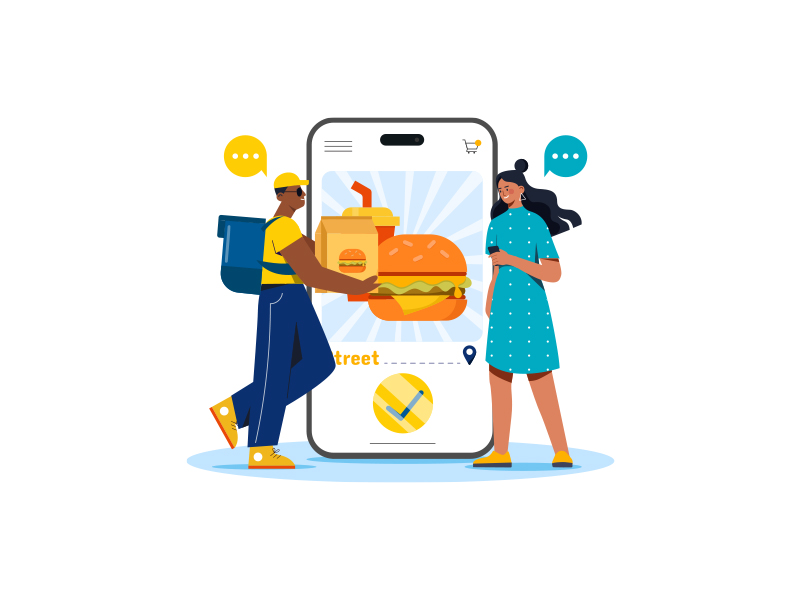
Blinkit. Zepto. Swiggy Instamart. What began as delivery experiments has become structural consumer habits. Quick commerce today handles over 6 million daily orders across India’s top cities. The average basket size is growing. The frequency is growing. And crucially: the category of goods being ordered on Qcommerce has expanded far beyond impulse snacks to include staples, fresh produce, and even nutritional supplements.

But the most underappreciated development in quick commerce is not the speed. It is the data. Platforms like Blinkit and Zepto are sitting on extraordinarily granular demand signals, what neighbourhood wants what, at what time, in what basket combination. They’ve started using this data to promote recipes, bundles, and meal-planning tools. Zomato’s “What to Cook” feature now drives ingredient discovery. This turns a delivery platform into a taste-making platform.

For founders, this creates both opportunity and dependency risk. Brands built on the back of Qcommerce can scale quickly, but a focus on a single channel exposes them to listing policy changes, deep discount wars, and the platform’s own private-label ambitions. The wise founder builds across channels, but designs for the speed economy.
Meanwhile, Zomato and Swiggy’s food delivery arms continue to reshape restaurant economics. Together, they handle over 10 million orders on peak days. But more importantly, they’ve created a new consumer behaviour: discovery eating. People no longer just order from their favourite restaurant. They browse, explore, and experiment. The cloud kitchen economy, built entirely on this behaviour, has grown into an ₹8,000 crore sector.
FOUNDER INSIGHT · DISTRIBUTION APPROACH FOR FOUNDERS
- Design SKUs specifically for QCommerce: packaging that survives last-mile, sizes that hit the right price point at the right margin
- Invest early in D2C as a data and loyalty layer, even if volumes are small
- Track platform private label moves closely; today’s shelf space can become tomorrow’s competitive threat
- Use QCommerce data as a product-market-fit signal before investing in manufacturing scale
RULE 03
Global Exposure Has Arrived on the Plate
MasterChef, YouTube, and how screen exposure is reshaping taste
Consider a 19-year-old in Raipur who has never left India, but one who knows what a miso glaze tastes like, can describe the difference between a French beurre blanc and a beurre noisette, and spent last Sunday attempting a Korean banchan spread at home. Learned entirely from YouTube. Not exceptional, representative of a large and growing cohort.
The globalisation of Indian food taste has happened not through travel, but through screens. MasterChef Australia, with its inexplicably devoted Indian viewership, put exotic techniques and ingredients on the aspiration list of millions of home cooks. YouTube’s creator economy produced a generation of food educators, from Joshua Weissman to Ranveer Brar, who made cooking feel like a craft to be pursued, not a chore to endure.

The data is unambiguous. Google searches for “miso paste,” “tahini,” “kimchi recipe,” and “sourdough starter” from Indian IP addresses increased by more than 300% between 2019 and 2024. Searches for “healthy Indian recipe” grew 5x in the same period. The exposure economy is real, measurable, and fundamentally changing what people want to cook and eat.
Health influencers have added another dimension. Accounts like @Foodpharmer and @Dr.Siddhant.Bhargava collectively reach tens of millions of Indians, and they’ve turned ingredient lists into social currency. An influencer post calling out a brand’s “hidden sugar” can meaningfully damage sales within days. The same mechanism works in reverse: a credible health endorsement can accelerate a challenger brand’s trajectory faster than any traditional advertising campaign.
| FOOD TREND VECTOR | PRIMARY INFLUENCE | CONSUMER SEGMENT | COMMERCIAL OPPORTUNITY |
|---|---|---|---|
| Global cuisines (Korean, Japanese, Mexican) | YouTube, Netflix, food docs | Urban 18–35 | Ethnic sauces, paste, ingredient kits |
| Plant-based & alt-protein | Health influencers, Instagram | Fitness-oriented, 25–40 | Protein snacks, meat alternatives |
| Fermented & gut-health foods | Nutrition science, podcasts | Health-aware, 28–45 | Probiotic drinks, kimchi, kefir |
| Artisanal baking | MasterChef, home baking communities | Home cooks, 24–42 | Speciality flours, quality ingredients |
| Regional Indian rediscovery | Food creators, OTT travel shows | Urban nostalgia consumers | Regional snacks, heirloom grains, pickles |
For founders, this creator-influenced demand is a double-edged gift. The good news: you don’t need a ₹50 crore ad budget to build a brand. A well-told story, a credible product, and a few aligned content creators can build awareness at a fraction of the cost of traditional marketing. The hard news: the shelf life of content-driven trends is short. The winner is not the brand that chases every trend; it is the brand that builds genuine, lasting product superiority and uses content to accelerate discovery of something real.
FOUNDER INSIGHT · CONTENT-FIRST BRAND BUILDING
- Invest in owned content , recipes, how-tos, brand storytelling , before influencer spending
- Co-create with micro-influencers (50K–500K) for trust; macro for reach, don’t conflate the two
- Protect against “one-post brand syndrome”: one viral moment is not a brand; it’s a lead
- Track search volume and recipe mentions as demand signals before planning production runs
RULE 04
Health Is No Longer a Niche
The pandemic rewired India’s relationship with what goes on the plate
March 2020 did to Indian food habits what no wellness campaign ever could: it made the connection between diet and immunity feel urgent, personal, and immediate. Within months, turmeric, the ingredient that urban India had quietly moved away from, returned to shelves, now packaged as “golden milk” and sold at a premium. It was, in retrospect, a preview of everything to come.
The post-pandemic health shift is not a trend. It is a permanent reprogramming. According to a 2024 FSSAI and EY report, nearly 67% of urban Indian consumers are now actively reading nutritional labels, a figure that stood at under 30% in 2018. The concept of “functional food“, food that does something beyond merely nourishing, has moved from the health food store into the mainstream supermarket aisle.

What is particularly interesting and under-discussed is the democratisation of health consciousness. Earlier, the “health food consumer” was an affluent, English-speaking city dweller who shopped at Nature’s Basket. Today, the same label-reading behaviour is visible in Tier-2 cities, where awareness is rising alongside income. Brands like Satvik and Yoga Bar were early movers; the next wave will serve this emerging, more value-conscious health consumer.
Equally notable is the emergence of category crossovers: food that is also medicine, snacks that are also functional, indulgence that is also nutritious. Consumers are rejecting the old trade-off between taste and health, and brands that deliver both are gaining clear market share. The ₹800 crore acquisition of Yoga Bar by ITC in 2022 was not just an investment in a brand; it was ITC buying insurance in the health-first future.

There is, however, a cautionary note for founders. The health positioning race is beginning to look like a beauty industry problem: everyone claims everything. “No added sugar,” “clean label,” “natural,” “organic” , these phrases are rapidly losing signal value as they become universal. The next generation of health brands will need to compete not on broad claims but on specificity, verifiability, and, increasingly, clinical credibility.
Regulatory pressure is rising in tandem. FSSAI’s evolving guidelines on front-of-pack labelling and claims like “high protein” or “low fat” are tightening. This is not a burden for honest brands; it is a moat. The brand with genuinely clean formulations will be protected as the regulatory environment catches up with the marketing environment.
FOUNDER INSIGHT · BUILDING CREDIBILITY IN HEALTH FMCG
- Invest in third-party certification early; FSSAI certifications become marketing assets, not just compliance costs
- Specificity wins: “high in fibre” beats “healthy” every time with the informed consumer
- Consider clinical advisory boards; even small brands can build scientific credibility affordably
- Watch for FSSAI labelling regulation updates in 2025–26; early compliance is a competitive advantage
RULE 05
Source & Sustainability Are Price Tags Now
Where your food comes from has become part of what it costs, and what it earns
Ten years ago, sustainability in Indian food was a conversation confined to NGO reports and premium export brands. Today, it is a mainstream purchasing variable , not yet dominant, but growing fast, and disproportionately influential among the very consumers who are earliest to adopt and loudest in advocacy.
The “source story” has become a brand asset. Brands that can trace their ingredients to a specific farm, community, or traditional practice are commanding both premium pricing and superior press coverage. The Whole Farm model, once a western import, is finding genuine expression in Indian brands: from direct farmer partnerships in the pulses category to single-origin coffee brands that name the estate on the label.

What is distinct about the Indian sustainability moment is its connection to tradition rather than western environmentalism. The resurgence of interest in heirloom rice varieties, forgotten millets, and indigenous spices, this is not consumers choosing sustainability over taste. They are rediscovering that India’s agricultural heritage was, by definition, more sustainable. Brands tapping into this framing, local, ancestral, traceable, are building a uniquely Indian premium story that does not feel foreign or imposed.
FOUNDER INSIGHT · BUILDING THE TRACEABLE SUPPLY CHAIN
- Farmer partnerships are a brand asset, not just a sourcing strategy; document them, tell them
- The “farm to fork” story must be specific: region, variety, practice. Generic claims dilute quickly
- Consider FPO (Farmer Producer Organisation) partnerships for supply security and social credentials
- Packaging material choices need to be locked early; retrofitting sustainability is expensive
RULE 06
Origin Has Become Premium
The geography of food: GI tags, regional pride, and the new Indian terroir
If you had told a Mumbai supermarket buyer in 2015 that Alphonso mango pulp from Ratnagiri would one day command a 4x premium over generic mango pulp , not in an export market, but domestically , they would have laughed. Today it is simply the market. India has discovered its own terroir, and the commercial implications are profound.
The Geographical Indication (GI) tag system, which had long been underutilised, is finally beginning to function as the commercial asset it was designed to be. India has issued over 600 GI tags across food, handicrafts, and agriculture, and in the last three years, brands have come to view these tags as luxury signals rather than bureaucratic footnotes. Darjeeling tea, Alphonso mangoes, Kolhapuri jaggery, Bikaneri bhujia, these are not just products; they are addresses.

But the bigger force is cultural. India’s regional food diversity, always immense, is being rediscovered by urban consumers with a curiosity that was not there before. The explosion of regional restaurant formats, the viral success of “my nani’s recipe” content, and the premium positioning of regional condiment brands all point to the same underlying force: origin is the new aspiration.
This creates a genuinely original opportunity for Indian food founders that has no parallel in Western markets. The French have had their AOC system for wine for decades; Indian food is only now beginning its AOC moment. The brand that builds a credible, well-documented, origin-first identity around a specific Indian geography or food tradition is building something that global multinationals cannot buy, because it is intrinsically, irreducibly Indian.

One note of realism: the “origin premium” can be claimed but rarely sustained without genuine supply chain commitment. Brands that slap a regional name on a generic product quickly face consumer backlash in the age of social media verification. The origin story must be real, documented, and defensible, and founders need to think about supply security from the beginning, not after they scale.
FOUNDER INSIGHT · BUILDING WITH ORIGIN & GEOGRAPHY
- Audit your ingredient origins. If you have a genuine regional story, it’s probably your best brand story
- Explore GI tag licensing as a credibility mechanism, not just a legal formality
- Regional brands have natural moats in community trust; build early in the home market before expanding
- The export opportunity for GI-tagged Indian products is significant, 64% growth in GI product exports for FY24 (APEDA)
THE CONSUMER ATLAS
Who Is Actually Eating?
A taxonomy of India’s new FMCG consumer, six archetypes every founder must know
The phrase “Indian consumer” has always been a polite fiction. India does not have one food consumer. It has dozens, each shaped by a different cocktail of income, aspiration, geography, age, and media diet. But in the post-pandemic landscape, six archetypes have emerged with enough clarity and commercial weight to be the foundation of any serious FMCG brand strategy.
Understanding these archetypes is not an academic exercise. It is the first real act of product strategy. The brands that have scaled fastest in recent years, from Yoga Bar to Epigamia to Paper Boat to Farmley, did so because they had a precise, well-reasoned clarity about exactly which consumer they were building for. Those who have struggled have often tried to serve all six at once.


The matrix above is not just an academic mapping; it is a product strategy tool. A founder building a millet-based snack brand needs to decide: is this for the Health Seeker (premium, protein-forward, clean label) or the Value Upgrader (accessible, aspirational, kirana-distributed)? Same ingredient. Two completely different brands. Two completely different price points, channels, and stories.
There is also an important temporal dimension to this taxonomy. Archetypes are not static. The Value-Conscious Upgrader in Tier-2 India today is on a trajectory, rising income, better smartphone access, and growing health awareness, to become the Health Seeker of 2028. The brands that build trust with them now, at their current price sensitivity, will be the brands they remain loyal to as they climb. That is not a small prize.
FOUNDER INSIGHT · ARCHETYPE-FIRST BRAND STRATEGY
- Pick one primary archetype and one adjacent secondary, build the product for the primary, and the story for both
- The Value Upgrader (T2/T3, ~180M consumers) is the most undercapitalised opportunity in Indian FMCG right now
- Archetype evolution is predictable, track income and awareness trajectories, not just current behaviour
- The Conscious Consumer (38M) punches above its weight: the vocal minority that shapes the mainstream majority
- Never conflate distribution archetype with brand archetype, a Convenience Native may discover you on Q-commerce but still value your health positioning deeply
THE INVESTOR’S VIEW
What the Market Is Telling Founders
Six pillars. Each is a legitimate standalone thesis. Together, they describe something larger: India is in the middle of its most consequential food renaissance, a simultaneous reimagining of what food means, where it comes from, how it reaches us, and what it is expected to do for the body, the identity, and the soul.
The thesis, distilled from years of watching this market closely:
The brands that will win in Indian FMCG over the next decade are those that sit at the intersection of at least three of these six pillars. A health-first snack brand with a genuine origin story and a D2C-first distribution model. A regional condiment brand that leverages food creator culture and builds a sustainability story around farmer communities. A functional beverage that earns scientific credibility while riding the global inspiration wave.
India does not need more “me too” health snack brands or generic ethnic sauces. It needs founders who are obsessed with the specific: a specific consumer, a specific geography, a specific claim they can prove, a specific distribution insight they’ve uncovered. The New Rules are not a checklist; they are a map. The white space is in the intersections.
The kitchen table is not just a consumer insight. It is a cultural institution that has been quietly, persistently evolving. And the next significant Indian food brand will be built by a founder who understands all six of these rules and identifies the white space in their intersections.